Everything you need to know about sourcing responsibly for EV supply chains

This year’s Leaderboard results demonstrated progress toward cleaner and more just auto supply chains, but also significant gaps with regard to human rights due diligence and responsible sourcing.
New regulations in the EU, such as the Corporate Sustainability Due Diligence Directive (CSDDD) and the EU Batteries Regulation, mean there are now more concrete business risks for failing to comply with international human rights due diligence (HRDD) standards. And that dynamic is beginning to spread beyond Europe: with South Korea’s National Assembly considering two HRDD bills, Thailand proposing draft legislation on responsible business conduct and Indonesia fast-tracking legislation on mandatory human rights due diligence—all within the last year.
In the face of growing regulatory risks, the Lead the Charge Leaderboard is a practical tool automakers can use to identify shortcomings in their practices and ideas for how to improve. The accompanying best practices briefing offers specific examples of what leading automakers are doing. No company has achieved top performance across all areas, but taken together, the leading practices provide a detailed roadmap for advancement toward sustainable and just EV supply chains.
In this newsletter, we’ll take a deeper look at what automakers can do to strengthen their human rights due diligence practices.
Automaker progress on due diligence fundamentals
The indicators in the Human Rights and Responsible Sourcing Section of the Leaderboard are structured around key international standards and frameworks for HRDD, such as the UN Guiding Principles and the OECD Guidelines. These frameworks also underpin the aforementioned regulations, including the CSDDD and the EU Batteries Regulations; which is one of the reasons why AutoNews called the Leaderboard an “an informal gauge of regulatory preparedness.”
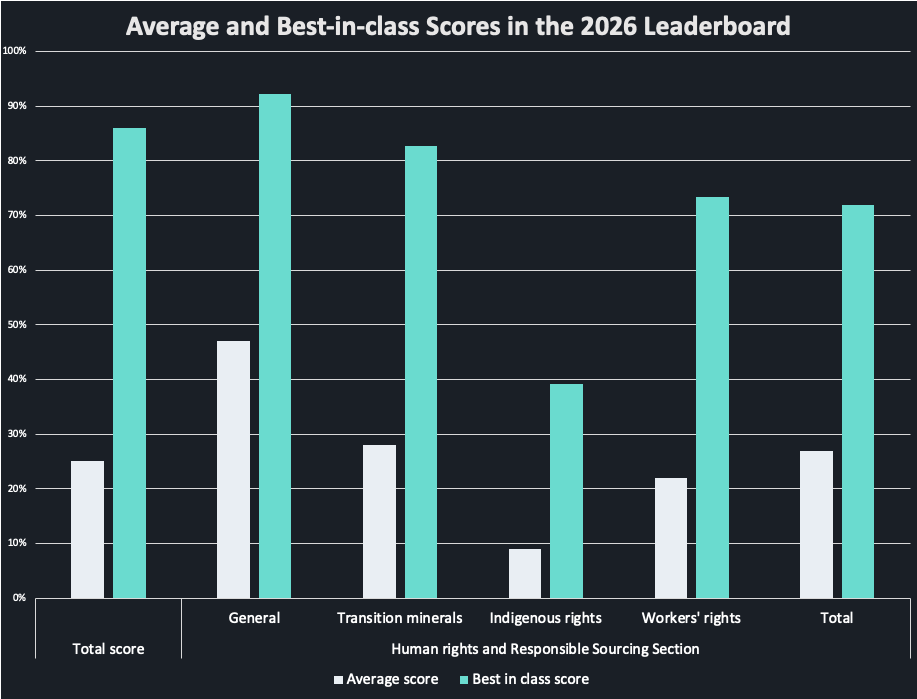
The 2026 Leaderboard analysis shows automakers have made strong progress on due diligence fundamentals, with the average score across all automakers on overall human rights due diligence (evaluated in the “General” subsection) now up to 47%—up 16 percentage points since 2023. These foundational practices include establishing human rights policies and supplier requirements, assessing and auditing suppliers against these requirements, mapping their supply chains and identifying salient human rights risks within them.
By themselves, these practices fall short of the risk-based approach to due diligence, as established in the UNGPs and the OECD Guidelines, and required by the CSDDD and EU Batteries Regulation. As a result, the average score in this section of the Leaderboard remains low: just 27% across all 18 automakers.
What employing a risk-based approach to due diligence means in practice
A risk-based approach to due diligence requires automakers to go beyond applying blanket approaches to all suppliers, which in practice often means simply off-loading requirements onto first-tier business partners. Instead, they need to conduct more in-depth assessments for the most salient risks and then deploy robust mitigation measures in order to find solutions.
This year’s Leaderboard results showed that some of the top performing companies are starting to move in this direction and, in so doing, bring their due diligence practices more fully in line with international frameworks. These shifts are why there are such large gaps between the average and best-in-class scores in the Human Rights and Responsible Sourcing Section of the Leaderboard.
Examples of such practices identified in this year’s Leaderboard include:
📚Mercedes, Volkswagen and Tesla publish detailed raw material reports on their progress to prevent, mitigate and remedy human rights and environmental harms across a range of supply chains such as lithium, cobalt and nickel. In these reports, the companies provide detailed analysis of the human rights and environmental risks identified in each supply chain and disclose multiple examples of direct engagement with extractive companies and impacted rights holders to address specific harms.
✒️Ford details a bespoke strategy for mitigating risks of forced labor in its supply chain as well specific measures to mitigate risks to FPIC in its supply chain.
📋Mercedes, Ford and Volkswagen have developed tailored supplier requirements for their battery supply chains, including requiring battery mineral supply chains to undergo audits by the Initiative for Responsible Mining Assurance (IRMA).
👩🏭 Tesla discloses several examples of remedy provided to supply chain workers for confirmed breaches of their rights.
In a recent opinion piece in Automotive News, Jim Wormington of Human Rights Watch and Krista Shennum of Climate Rights International explain that implementing an effective risk-based approach to supply chain due diligence requires automakers to make two key shifts.
First, automakers “need to invest in deeper, on-the-ground engagement with affected communities and workers.” In countries where key raw materials are located, human rights abuses are the product of a complex political, economic, and social system. Building meaningful solutions requires car companies to build deep and lasting relationships with human rights defenders and civil society groups, and local government and industries, to understand how they can use their leverage and resources effectively.
Second, car companies “should coordinate to maximize the industry’s leverage”. The depth and length of engagement required to tackle complex human rights challenges means that “no single car company can address the full range of risks across their supply chain. But safe and effective spaces for collaboration do exist — and they are necessary for addressing industry-wide risks.”
For concrete examples of why these shifts are necessary and what they look like in the real world, read on for two case studies from the 2026 Leaderboard report.
Engaging with community members in Indonesia impacted by nickel mining
A case study from SIRGE Coalition in the 2026 Leaderboard describes how the residents of Kawasi Village on Obi Island, the ancestral land of the Tobelo Galela Indigenous People, have documented the impacts of Harita Nickel, the company operating a nickel mine and processing facility on the island. The facility has possible supply chain connections to major automakers including BMW, Ford, General Motors, Honda, Mercedes-Benz, Tesla, Toyota, Volkswagen and Volvo.
The people impacted have documented multiple flooding events, exacerbated by or originating from infrastructure failures at the mine and deforestation linked to mining.
Vuyisile Ncube from Earthworks talks about the impacts of Harita Nickel on the residents of Kawasi Village
The community is demanding compensation to residents for costs associated with damages incurred from the flooding and to address the root causes of ongoing infrastructure and waste management failures to prevent future disasters. Harita has not responded to the community directly or shared its plans on what mitigation measures will be implemented to address the harm caused by their operations.
Fifteen civil society organizations around the world sent a letter of support for the community’s demands, both to Harita itself and automakers sourcing from the company such as Mercedes-Benz, Tesla, Volvo, and Volkswagen. Mercedes-Benz was the only automaker to respond. The company met with civil society and a representative from Kawasi village to learn more, so that the company could continue to engage with Harita Nickel about the community’s demands.
Every other automaker with a supply chain connected to Harita refused to engage, hiding behind the complex nature of auto supply chains to avoid assuming responsibility.
There are also several examples of collaboration between automakers to address human rights risks in Indonesia. The AutoNews article highlights joint visits by automakers to nickel industrial parks in order to monitor conditions and raise human rights concerns with local authorities. Tesla’s 2024 Impact Report spotlights the Nickel Efforts for Sustainable Transition (NEST) that is supported by Tesla and other supply chain companies. The project aims to address negative impacts of nickel extraction through biodiversity conservation, reforestation, and community engagement.
Addressing bauxite mining impacts in Guinea
Another case study in the 2026 Leaderboard by Inclusive Development International (IDI) highlights similar issues in Guinea, where the country’s oldest mining company—Compagnie des Bauxites de Guinée (CBG), a joint venture of Rio Tinto, Alcoa, Dadco and the Guinean government—is planning to expand its operation to areas north of the Cogon River in Guinea’s Boké region. The area south of the river has been heavily strip mined for decades, devastating the landscape and displacing thousands of people, while areas to the north have been mostly unaffected. Now communities in CBG’s anticipated expansion zone are beginning to speak out about how they want the company to engage with them before any mining proceeds on their land, and what they would expect in return if it does.
“If CBG destroys our land, streams and rivers like they have done on the other side of the river—we are as good as dead.”
-Boubacar Bah, a resident of Teliwora, one of the towns that lies in the path of new mining.

Boubacar Bah crossing the Cogon River. Photo by Souleymane Camara.
Several communities that would be impacted by the mine expansion have made the following requests:
⛏️Mining should proceed only once there has been a true dialogue and affected communities have provided consent to the terms on which the project can proceed.
📋 There should be a fully transparent census process and participatory impact assessment and CBG and the communities should reach agreement on plans to avoid or mitigate negative impacts and the benefits that communities will receive.
💲Fair compensation should be provided, including for losses due to the exploration activities currently underway, before any land-taking occurs.
🧑💻Communities should have access to technical and legal advisers to support them in these processes.
According to IDI research, many automakers use CBG bauxite in their products—including Audi, BMW, Ford, GM, Mercedes-Benz, Porsche and Toyota—and have a role to play in supporting the communities in the north in the proposed agreement-making process.
Several automakers, particularly Mercedes-Benz, BMW and Audi, have set positive examples through their engagements with CBG and the already-affected communities in the south. Mercedes-Benz stands out for its site visits to CBG mines, meetings with affected communities to discuss mining impacts, and engagement with civil society and with the company regarding these communities’ needs. In an example of automaker collaboration, Drive Sustainability, a coalition of 11 car companies that includes BMW, Mercedes Benz Group, Ford, Toyota, Volkswagen, and Volvo, wrote to The Aluminum Association, an association of dozens of aluminum producers, “to express concern about the situation in Guinea,” to solicit information on members’ human rights due diligence efforts, and to express support for the ongoing mediation between CBG and affected communities.
While more is needed, these positive engagements from select automakers are a step toward ensuring remedy for communities in the south, and they can serve as a foundation for continued engagement with CBG and other stakeholders to ensure respect for the rights of those in the north.
Good news: Polestar 2, 3 Batteries Now Contain at Least 50% Recycled Cobalt
Polestar just took a big step toward a circular EV battery supply chain with their announcement that Polestar 2 and Polestar 3 batteries now include at least 50% recycled cobalt.
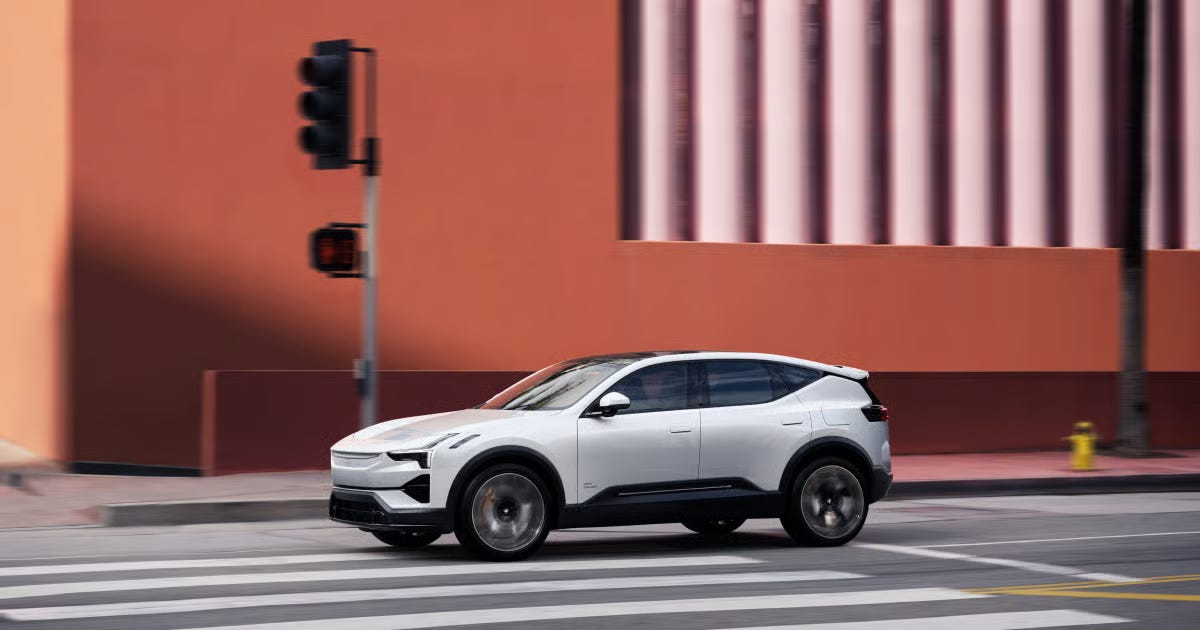
Image courtesy of Polestar
Polestar partners with Volvo Cars to refurbish batteries. Polestar 2 and Polestar 3 vehicles that require a battery replacement receive a refurbished battery, resulting in a circular flow.
“To drive a Polestar is an intentional choice by customers who care about tomorrow,” said Fredrika Klarén, Polestar’s Head of Sustainability. “Electrification points to a new kind of system: one where resources stay in use and abundance replaces depletion.”
What Lead the Charge Members are Reading this Month
A new study from Greenpeace adds to the growing body of research on how mining for new minerals can be minimized through battery research and recycling. Greenpeace proposes 5 key interventions for a green and just energy transition with less minerals, all of which automakers have powerful levers to act on:
🚙 Reduce mineral demand through investment and delivery of shared mobility systems like improved public transport and smaller, more efficient cars
🔋 Incentivise battery technology substitution towards alternatives requiring less lithium, cobalt, or nickel
♻️ Design for circularity and scale up recycling
🚨 Prioritise mineral use for essential energy transition needs
🌳 Protect ‘Key Restricted Areas’ from mining development.
Is ‘mass balance’ accounting a legitimate way for steelmakers to measure emissions - or is a mass deception impacting both automakers and auto consumers? Check out our case study from Steelwatch to learn more about why the Japan Iron and Steel Federation’s approach to mass balance is the wrong way for steelmakers to measure decarbonization progress.
Public Citizen just published two new pieces on the importance of strong mining standards. One provides a helpful overview of legislation currently being considered by US legislators that would accelerate and reinforce the harms that have long defined the mining industry. The other highlights how the Consolidated Mining Standard Initiative undermines human rights and environmental protections.
A new report from Earthworks found that communities and workers in Indonesia are facing imminent and deadly risks from the country’s nickel mining boom, tied directly to the supply chains of most major global automakers.
Solutions for Our Climate conducted their own analysis of the data in the Lead the Charge Leaderboard, focused on steel decarbonization, and came up with some interesting findings:
🇰🇷 🇨🇳 🇯🇵 As of 2024, South Korea, China, and Japan collectively account for 61.2% of global crude steel production and 54.8% of consumption, placing these countries at the forefront of the steel supply chain’s decarbonization.
🤝 Clear, credible demand signals through longterm offtake agreements with steelmakers will be crucial in accelerating decarbonization for both the automotive and steel sectors.
⚖️ To effectively assess and compare decarbonization strategies across steel supply chains, a consistent definition and standard for ‘green steel’ is essential. As corporate net zero transition accelerates, globally recognized standards are being required to ensure transparency and accountability.
💱 In a rapidly evolving trade environment, the automotive industry faces significant tariff risks if it lacks a robust carbon reduction roadmap for raw materials. Conversely, by systematically managing supply chain emissions and proactively adopting green steel strategies, automakers can mitigate trade risks and strengthen their long-term global competitiveness.
Five Chinese car companies, one parts manufacturer and nine steelmakers have signed an agreement to work together toward steel decarbonization - and to begin by clearly defining what kind of products qualify as ‘green steel.’ DialogueEarth calls it an ‘uphill battle’ for Chinese automakers to decarbonize their steel supply chains, due to their lower ranking in the Lead the Charge Leaderboard on green steel adoption compared to US and EU automakers.
Check out the World Benchmarking Alliance 2026 Benchmark Hub, which reinforces many of the findings in the Lead the Charge Leaderboard.
There is finally a comprehensive analysis of global steelmaker decarbonisation efforts - the SteelWatch Corporate Scorecard.