Can lithium mining for EVs actually benefit impacted communities, rather than harming them?
CSOs say the CMSI is a weak standard; Elysis aluminum venture deploys first carbon-free anode in Canadian smelter

As demand for lithium continues to rise - by 30% in 2024 alone - automakers and their suppliers are scrambling to find responsible, lower-carbon sources of this key mineral for EV battery supply chains. Although new battery chemistries can relieve some of the pressure, demand for lithium is projected to continue to rise over the next decade.
At the same time that rising demand is putting huge pressure on the lithium market, automakers must also take steps to mitigate human rights and environmental impacts in their lithium supply chains. The lithium market is complex, and constantly changing. In this month’s edition of the Lead the Charge newsletter we’re offering an update on two new reports on lithium mining in South America, to help automakers get a clear picture of the factors that go into making a responsible choice for sourcing lithium.
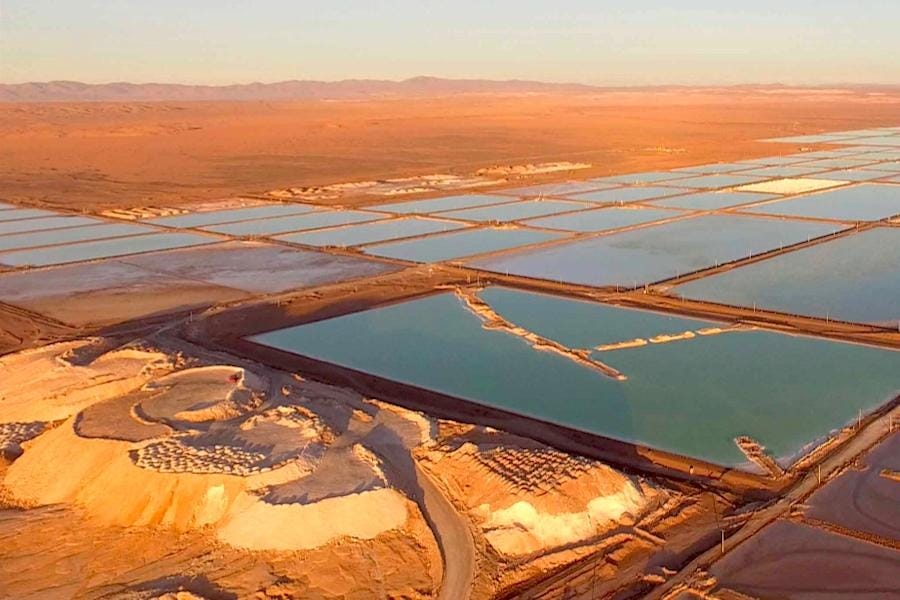
Lithium mining could be a huge boost for Chilean economy
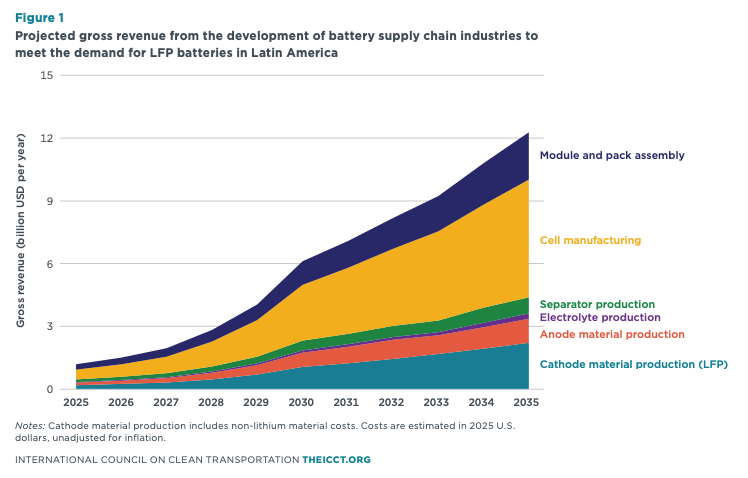
The first report, from Centro Movilidad Sostenible and the International Council on Clean Transportation, paints a promising picture of the economic potential of the lithium industry in Chile. Automakers that aim to have a positive impact on communities and workers in their supply chains should take a close look at this report, which explores how Chile can expand its role beyond mining by exploring opportunities for economic growth, job creation, and sustainable development through cathode production, battery manufacturing, and recycling.
The report estimates that if Chile were to develop its domestic value chain to the point that it could supply the projected demand for EV lithium iron phosphate (LFP) EV batteries in Latin America, that value chain could generate an annual gross product of up to $6.1 billion by 2030 and $12.3 billion by 2035. That would represent a considerable 1.8% - 3.7% increase in Chile’s GDP, and could lead to the creation of 19,000–32,600 jobs by 2035.
By supporting the development of an integrated domestic value chain for LFP EV batteries in Chile, automakers can also advance the decarbonization of their own supply chains. According to the report, the carbon intensity of Chilean lithium is 86% lower than that produced from Australian ore, and 67% lower than lithium carbonate produced in the US.
But there are risks to expanding its battery production infrastructure that Chile must carefully manage. The existing lithium mining industry has already raised the cost of living for mining-impacted communities. Expanded mining activity could pose serious environmental risks for local ecosystems, alongside public health impacts. Automakers have a responsibility to conduct proactive due diligence, engaging with impacted rightsholders and putting pressure on suppliers to ensure that these impacts are remedied and future impacts are mitigated or avoided.
Lithium mining impacts clearly seen in Brazil
These risks are clearly illustrated by the second report we’re covering, from Cultural Survival as well as representatives of Indigenous A’uwẽ-Xavante and Jequitinhonha Valley communities (Indigenous and Quilombolas) in Brazil. They released an advocacy brief for #COP30 covering the impacts of lithium mining and transportation on Indigenous communities in Brazil. Automakers - especially those sourcing lithium from Brazil through battery suppliers - should take a close look at the policy brief to learn more about why the expansion of lithium mining infrastructure must be done carefully and with the Free, Prior and Informed Consent (FPIC) of impacted Indigenous peoples.
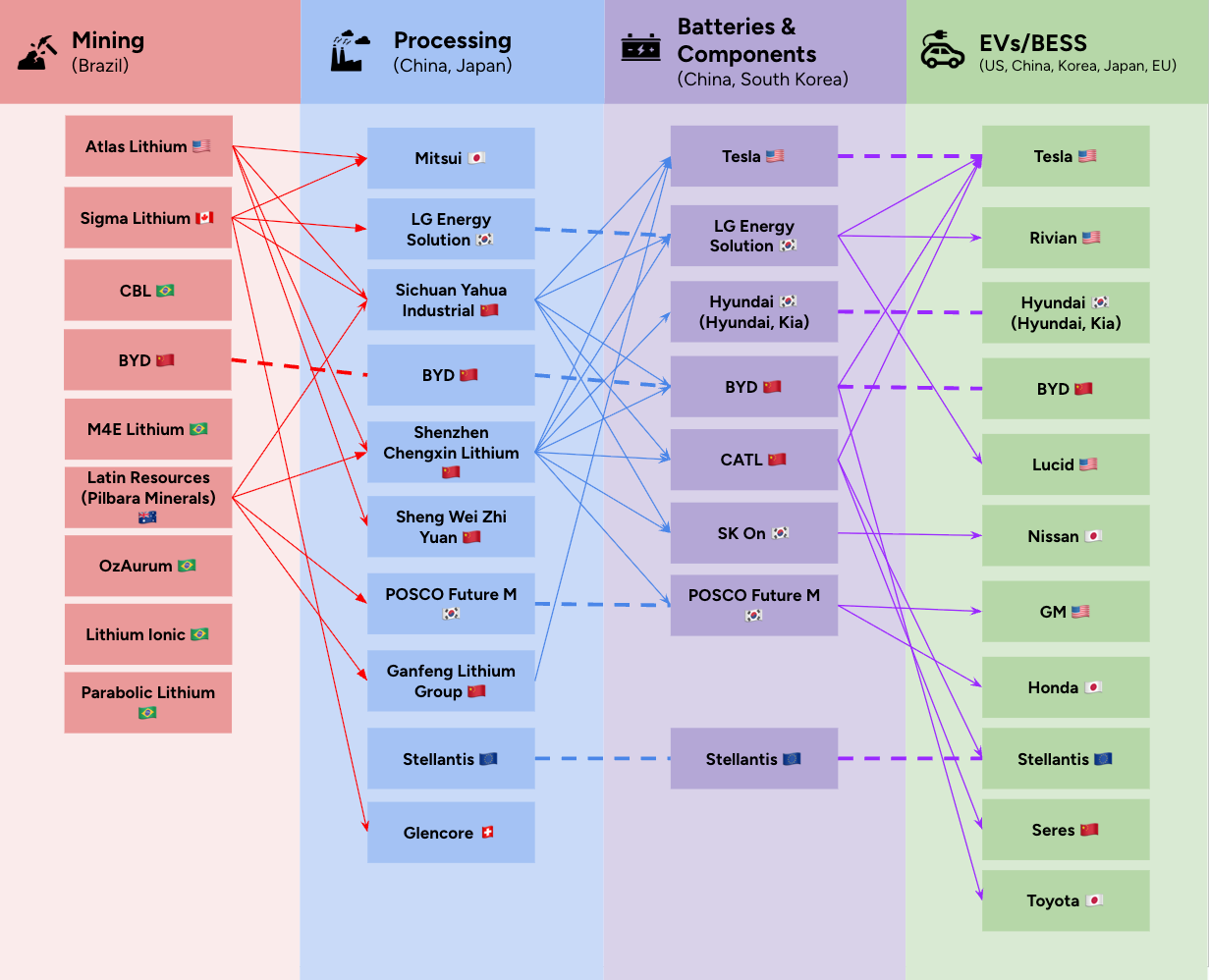
The Jequitinhonha Valley, north of Minas Gerais, Brazil (site of one of history’s greatest mining disasters) is now known by some as the “Lithium Valley.” The brief focuses on one project in particular as an example of the risks posed to communities by expanded lithium mining - Sigma Lithium’s Grota do Cirilo complex managed by Sigma Brazil. Sigma Lithium Corporation is a global lithium producer dedicated to producing electric vehicle batteries, with a local presence in Brazil under the name Sigma Brazil. They are connected via battery manufacturers to several automakers, including Tesla, Rivian, Hyundai, BYD, Lucid, Nissan, GM, Honda, Stellantis and Toyota.
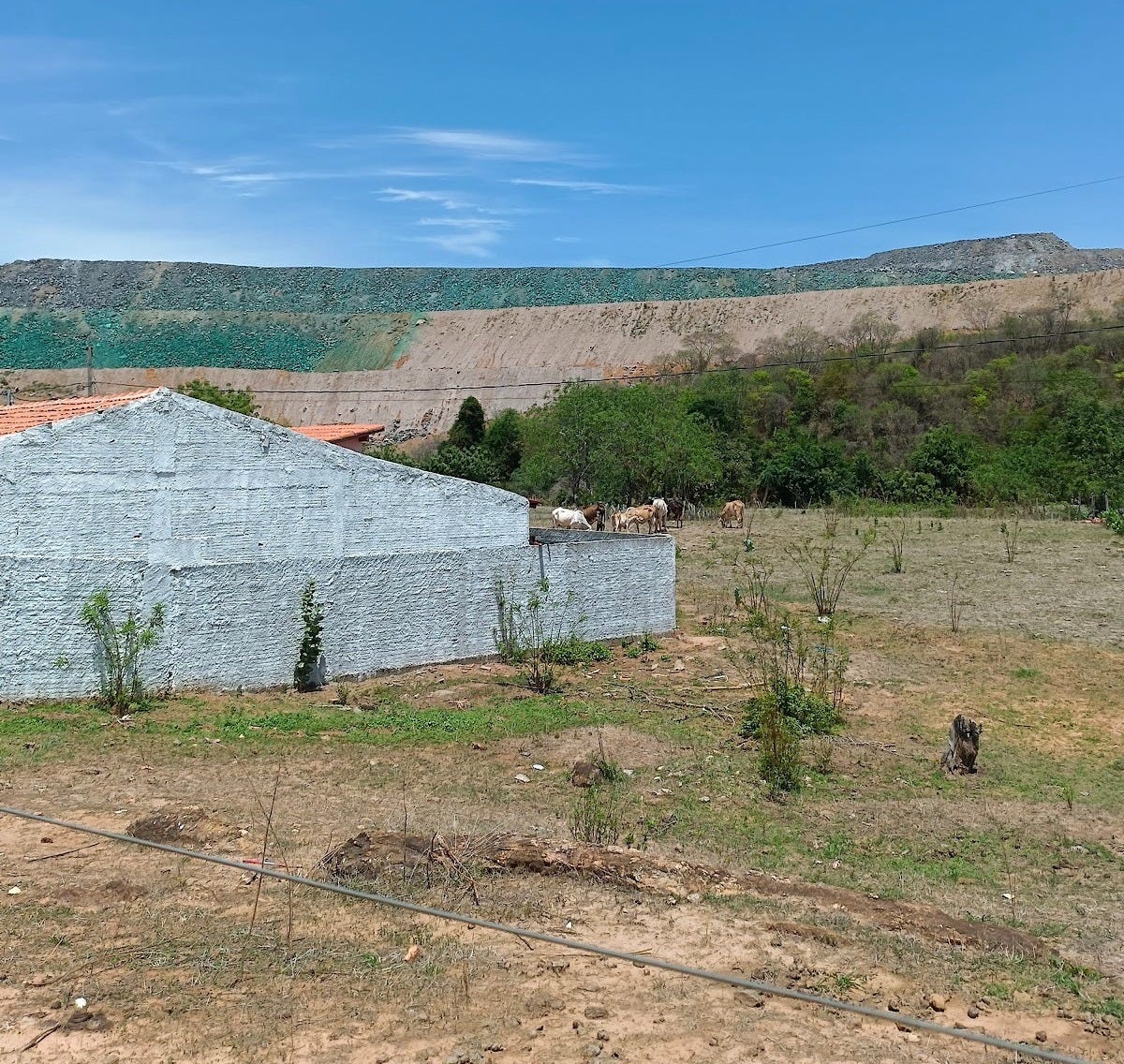
Experts predict that the planned expansion of this complex to increase lithium mining capacity will cause “profound and irreversible impacts on local ecosystems and water resources in an area where water is scarce for communities and local agriculture.” The region has more than 130 cataloged water sources and is considered the natural water reservoir for the municipality of Araçuaí and dozens of surrounding communities.
An ongoing technical assessment commissioned by the communities and supported by Cultural Survival and Earthworks in coordination with the SIRGE Coalition, has revealed preliminary findings indicating that the management of tailings, waste rock, and other byproducts—stored in open piles—fails to meet basic industrial or safety standards. These unsafe practices pose serious risks to surrounding communities: one river runs just a few meters from the waste piles, and a school for children is located less than one kilometer away.
According to Professor Klemens Laschefski from the Department of Geology at Federal University of Minas Gerais:
“Sigma chose the cheapest and most destructive path, turning the Jequitinhonha Valley into a victim territory of consumerism in the Global North. While local firms operate efficiently with lower impacts, Sigma devastates sensitive areas and disregards viable technical solutions.”
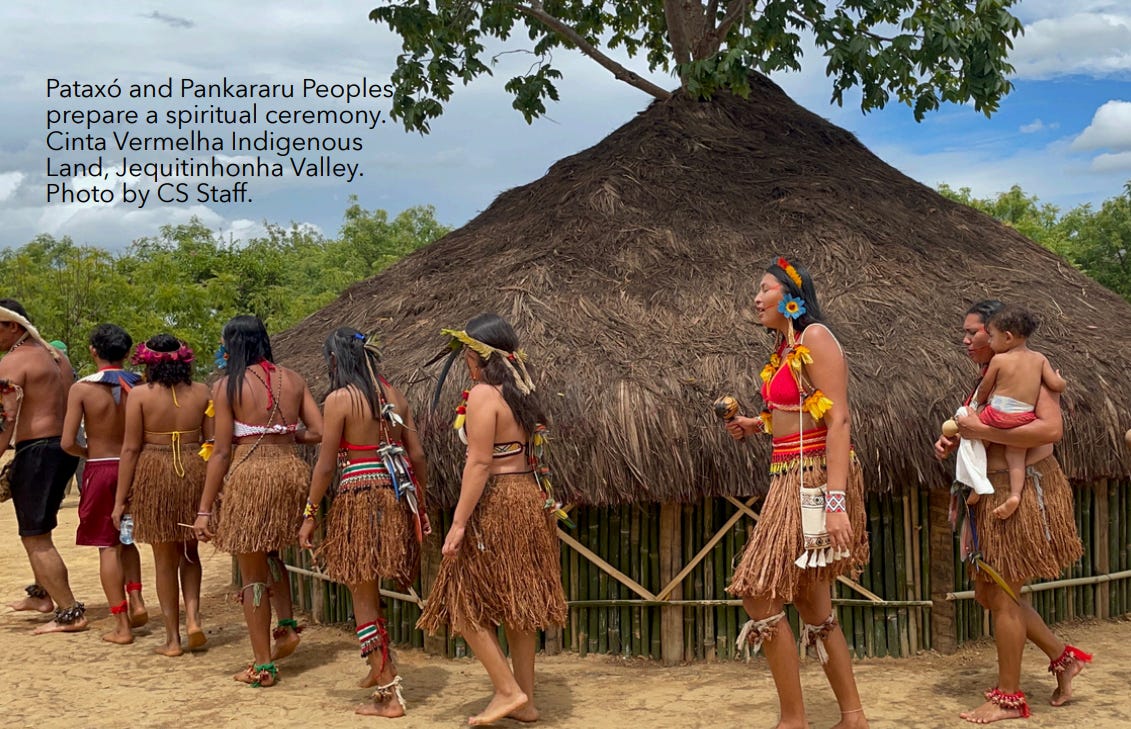
The process to approve the expansion of this lithium mine did not meet the standard defined by the United Nations Declaration on the Rights of Indigenous Peoples (UNDRIP), which calls for governments and companies to obtain the Free, Prior and Informed Consent of Indigenous peoples impacted by development. According to the brief by Cultural Survival, the Pataxó and Pankararu Peoples of the Aldeia Cinta Vermelha–Jundiba Indigenous Territory, the Aranã Caboclo Indigenous Peoples (whose members live in various locations awaiting the demarcation of their territory), the rural community of Piauí Poço Dantas, and the Quilombola communities of Giral, Malhada Preta, and Córrego do Narciso do Meio are all impacted by the expansion of the Sigma mine, and none provided their consent for the project.
The project was also approved in violation of the Brazilian constitution, which mandates prior environmental impact studies for activities potentially causing significant environmental degradation, as well as international obligations under International Labour Organization Convention 169, ratified by Brazil in 2004.
Extractivism masquerading as sustainability
Not only did the mine expansion violate human rights law, but the mine was funded with over R$486 million from the National Development Bank (BNDES) through the Fundo Clima , Brazil’s public climate fund created to finance adaptation and sustainability. According to Cultural Survival:
“Instead of protecting ecosystems or building community resilience, this climate finance bankrolls mining operations in the Área de Proteção Ambiental da Chapada do Lagoão in Araçuaí municipality, a biodiverse region rich in fauna, flora, and freshwater springs that serves as a natural water reservoir for dozens of surrounding communities.”
If automakers want to avoid participating in what Cultural Survival’s brief calls “extractivism masquerading as sustainability” then they must choose their lithium sources carefully. When automakers work in close collaboration with suppliers, governments and Indigenous groups, lithium extraction for EVs can benefit workers and impacted communities, rather than destroying ecosystems and harming public health.
NGOs criticize new draft of industry-led Consolidated Mining Standard Initiative
As London Mining Week - an event that brings together the global mining industry, major financiers, and governments from around the world - drew to a close, Public Citizen projected a message to attendees of the Resourcing Tomorrow mining industry gala dinner and awards ceremony:
“The CMSI is a weak standard that poses risks for investors, governments and mineral purchasers.”
Meanwhile, a range of civil society organizations criticized the recently published second draft of the CMSI, an industry-led initiative to consolidate several voluntary global mining standards. The Natural Resource Governance Institute raised concerns including:
The final governance model of the Consolidated Mining Standard requires board members to “speak with a unified voice when representing the Legal Entity to the community“, limiting stakeholders representing mining-impacted communities ability to engage openly about their concerns with the standard.
The draft does not clearly state whether corrective actions will be made public, limiting valuable information that stakeholders like automakers can use to hold their suppliers accountable;
While the draft standard claims to align with industry standards and international normative frameworks and guidelines, there isn’t analysis supporting this claim of equivalency. This makes it difficult for purchasers like automakers to determine if their supply chain is in alignment with international best practice.
According to the Tall Grass Institute, the draft CMSI standard “treats consent (from impacted Indigenous communities) as a desirable outcome, not a binding right,” in conflict with UNDRIP. The draft standard includes three performance levels, none of which require the explicit consent for mining projects from impacted Indigenous communities.
Tall Grass Institute’s comments note that this failure to require Free, Prior and Informed Consent is out of step with existing industry standards, such as the Initiative for Responsible Mining Assurance (IRMA), which requires documented consent before development or expansion. They also criticize the draft standard for earmarking less than half of Board seats for representatives of directly-affected groups, and for limiting seats for Indigenous representatives to a maximum of two.
Public Citizen raised similar concerns in their comments, while also observing that the draft standard does not incentivize mining companies to improve their practices over time. According to Public Citizen:
“The Assurance Process does not incentivize companies to move beyond ‘Good Practice Level,’ effectively rendering Leading Practice obsolete. As currently written, corrective actions and areas for improvement identified during the audit are only framed to meet the Good practice level. Continual Improvement Plans are also limited to steps to achieve the Good Practice Level. Facilities wanting to be assessed against Leading Practice in a given Performance area must indicate that to the auditor.”
Oxfam observed in their comments that the draft standard as written does not meet the verification scheme requirements of the EU Critical Raw Materials Act due to multi-stakeholder governance requirements. According to Oxfam:
“Our reading of the Governance Model and conversations with advisory group members have led us to conclude that the CMSI does not follow a multi-stakeholder model. Specifically, stakeholder groups are not allowed to select their own members, and primacy of fiduciary duties of board members is to the CMSI rather than their own constituency or to the organizations that they represent. We therefore recommend that all references to multi-stakeholder participation or governance be removed from the standard.”
Rainforest Foundation Norway’s comments raise an important concern: As written, the draft standard could encourage mining companies to contact un-contacted peoples. They suggest a revision to the standard language to clarify that uncontacted peoples should not be contacted, even to seek their Free, Prior and Informed Consent for mining activities.
Automakers often rely on these standards (for example, in the 2024 edition of the Leaderboard, 78% of the automakers evaluated used at least one such scheme) but the standards vary widely in quality, which introduces automakers to both accusations of greenwashing as well as risking failure of their internal due diligence processes. It’s essential that automakers use robust standards and avoid weak ones. As the standard development process heads into its final stages, civil society organizations remain united opposing weak standards, like the CMSI, that undermine human rights protections for mining-impacted communities around the world.
Elysis aluminum venture deploys first carbon-free anode in Canadian smelter
In a breakthrough for industrial decarbonization, Elysis has deployed the world’s first carbon-free anode in an existing aluminum smelter.
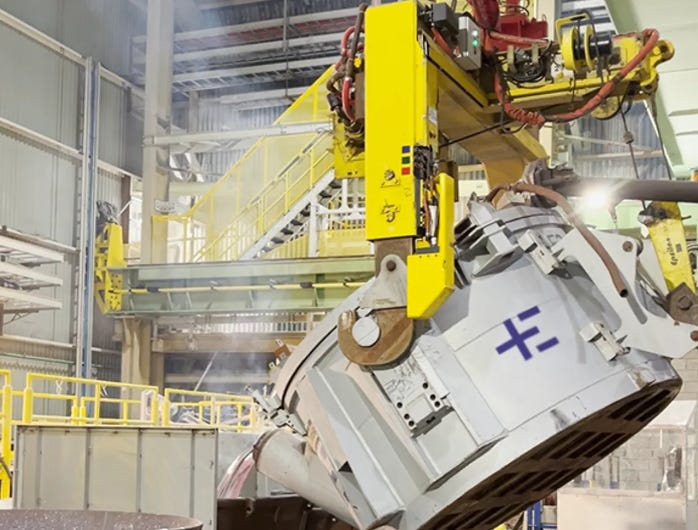
Aluminum manufacturers around the world are working to transition their facilities to clean energy. But the smelting process itself, the source of 20% of the climate-altering emissions from aluminum production, has remained reliant on the use of heavily polluting carbon anodes since the 19th century. The carbon anode smelting process creates CO2 as a by-product, as well as harmful sulfur dioxide pollution and climate-altering perfluorochemicals (PFCs) that persist in the atmosphere for hundreds of years. François Perras, president and CEO of Elysis, told Canary Media:
“This is really a first for the aluminum industry, and a worldwide first as well. We’re trying to replace a process that has been used for close to 140 years.”
Elysis says they plan to produce an aluminum product that is cost-competitive with conventional aluminum and uses the same amount of energy to produce. The new anodes will be available to install in existing smelting facilities, saving producers millions and lowering the cost of the decarbonized aluminum products for buyers.
Good news: Indigenous leadership continues to shape the global climate agenda
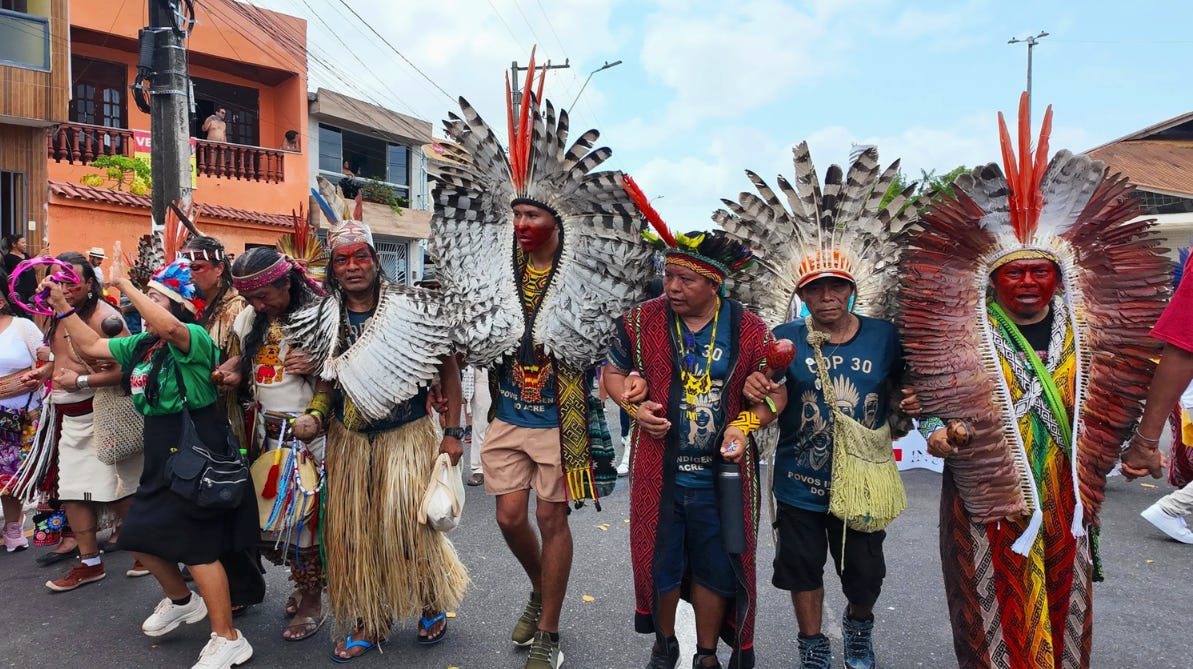
This year at #COP30 in Brazil, Indigenous organizations including SIRGE Coalition achieved a big step forward in the fight to ensure that Indigenous rights are treated as a critical part of just transition activities. As part of the United Arab Emirates Just Transition Work Programme (JTWP), a three-year process established at COP28 to facilitate discussions on pathways for achieving the goals of the Paris Agreement, new language was added establishing a rights-based baseline that applies to every sector and every just transition pathway that governments pursue in the name of climate action.
From the newly updated JWTP:
“The importance of the rights of Indigenous Peoples and of obtaining their free, prior and informed consent in accordance with the United Nations Declaration on the Rights of Indigenous Peoples, and the importance of ensuring that all just transition pathways respect and promote the internationally recognized collective and individual rights of Indigenous Peoples, including the rights to self-determination, and acknowledge the rights and protections for Indigenous Peoples in voluntary isolation and initial contact, in accordance with relevant international human rights instruments and principles; ”.
According to SIRGE Coalition: “By explicitly affirming Self-determination, Free Prior and Informed Consent (FPIC), the UN Declaration on the Rights of Indigenous Peoples (UNDRIP), paragraph 12(i) elevates Indigenous Peoples’ rights from the sidelines to core guiding principles that all just transition actions must respect and promote. This is also the first time a COP decision explicitly references Indigenous Peoples in Voluntary Isolation and Initial Contact (PIACI), marking an unprecedented recognition of their rights and the specific protections they require within the climate regime.”
Congratulations to all of our coalition members and allies who fought hard at COP to make this victory possible!
What Lead the Charge Members Are Reading
New research from Climate Rights International shows widespread negative impacts on local communities, from destroyed livelihoods to pollution that affects drinking water and health. The report recommends that electric vehicle and battery makers:
📋 Carry out regular, independent audits of nickel mines to ensure that suppliers respect human rights and the environment
⛓️ Use their position in the supply chain to pressure mines and nickel suppliers to change practices that cause environmental or human rights harm, prevent abuses, and ensure accountability and justice for violations
🔋 Increase transparency about EV supply chains by collecting information about companies throughout the supply chains engaged in mining, mineral processing, and battery production
According to a new report from the Ohio River Valley Institute, the US primary steel industry risks falling further behind in a rapidly decarbonizing global market.
A new report by Inclusive Development International, Action Mines-Guinea, CECIDE and ADREMGUI found that a controversial bauxite mine linked to Toyota, Ford, GM, BMW, Mercedes, Porsche and Audi, “has expropriated farmland, polluted water sources and caused long-term damage to the livelihoods of people near mining sites.”
Labor, environmental, faith, and community organizations delivered a letter to Kia officials at the Los Angeles Auto Show, sharing demands for a binding community benefits agreement to improve job standards, create equity measures, and ensure corporate accountability in response to widespread labor and environmental violations at companies in Hyundai-Kia’s U.S. supply chain.
Bloomberg published a useful explainer on the state of green steel that included some interesting updates:
🇪🇺 The EU is moving faster than any other region in the world, with emissions credits schemes and CBAM driving the transition
💱 Steelmakers in Asian markets are set to receive a generous amount of free emissions allowances during the next five years, limiting their exposure to carbon prices
🤝 BloombergNEF this year identified almost 200 supply agreements for low-carbon steel — more than double the number two years earlier
⬇️ Stegra predicts that by 2030 the European green steel market will be significantly undersupplied, with demand projected at about 19 million tons and supply reaching only around 9 million tons
Don’t miss this episode of The Daily on the impacts of recycling ICE vehicle batteries on public health in Nigeria. The EV transition offers an opportunity to develop better battery recycling practices that are safer for workers and impacted communities.
The Steelmaker Transformation Tracker from SteelWatch is a new tool to help steel buyers make informed decisions based on clear and consistent data across steel companies.
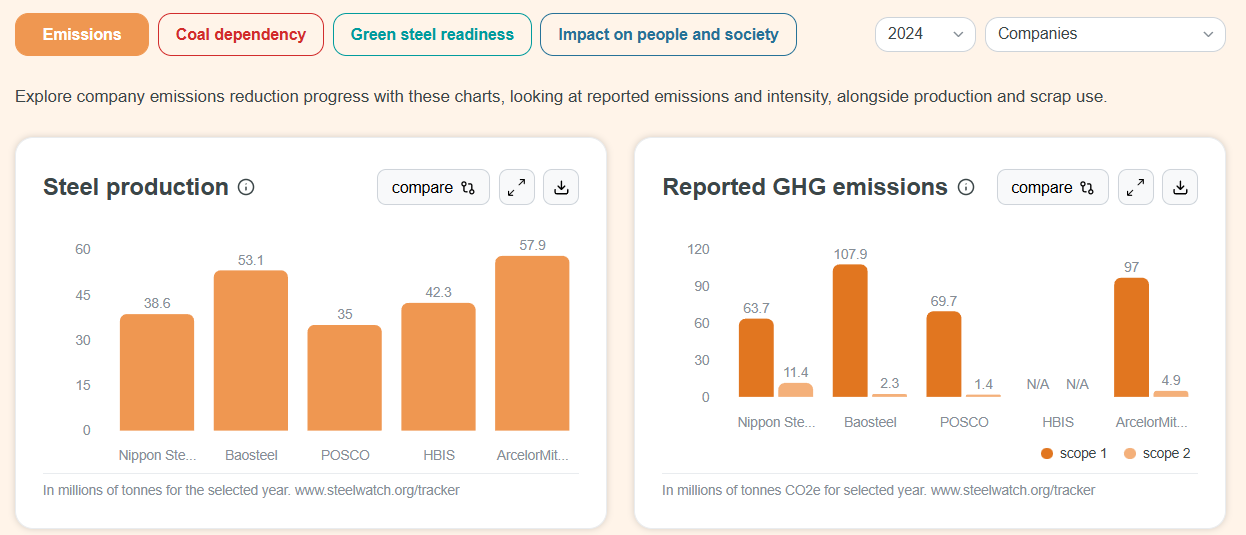
Opportunity Green has filed a complaint to the Luxembourg NCP calling on ArcelorMittal to publish a revised climate strategy that addresses its massive climate impact.
The Korean central government is officially joining the The Powering Past Coal Alliance (PPCA), signaling to Korean steelmakers that coal-based steelmaking is a relic of the past.
Steelwatch has the final word on the state of the green steel transition in 2025. Their conclusion?
“This year was defined not by decisive movement toward steel decarbonisation, but by the dominance of tariffs, cost pressures, uncertainty over policy incentives, and politicisation of steel within national security debates.”
A new handbook for communities impacted by mining and other forms of development has just been released by Voices, SIRGE Coalition, and OECD Watch. This practical guide shows how to use the OECD Guidelines to protect human rights, making the complaint process more accessible for impacted communities.
Unlike other EU automakers, Volvo understands that rolling back the EU’s electric car mandate will undermine the European auto industry’s ability to compete with Chinese automakers.
“Weakening long-term commitments for short-term gain risks undermining Europe’s competitiveness for years to come. A consistent and ambitious policy framework, as well as investments in public infrastructure, is what will deliver real benefits for customers, for the climate, and for Europe’s industrial strength. Volvo Cars has built a complete EV portfolio in less than ten years and are ready to go full electric with a bridge of long-range hybrids. If we can do it, others can as well.”